
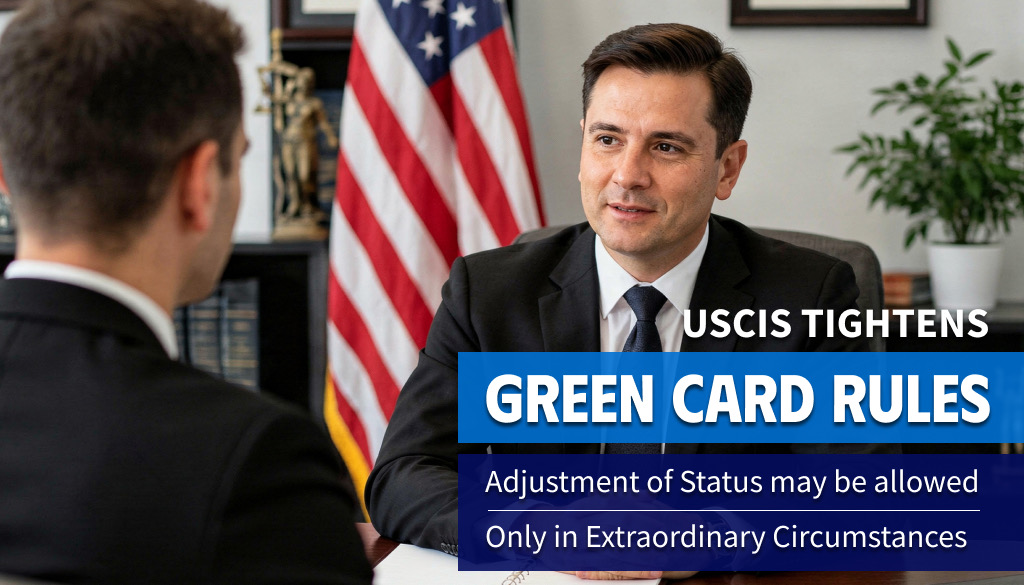
U.S. Citizenship and Immigration Services (USCIS) has announced a significant policy update that could change how many people apply for green cards in the future.
According to the new policy memo, USCIS says adjustment of status inside the United States should only be granted in “extraordinary circumstances.” Instead, the agency is emphasizing that most people should complete the green card process through U.S. consulates abroad.
This could affect
- H-1B workers
- F-1 students
- L-1 visa holders
- tourists on B-1/B-2 visas
- employment-based green card applicants
- family-based applicants already inside the U.S.
The update is already creating concern among immigration attorneys and employers because adjustment of status has been one of the most commonly used pathways for green card processing for years.
What Is Adjustment of Status?
Adjustment of status allows eligible immigrants already inside the U.S. to apply for a green card without leaving the country.
This process has been widely used because it allows applicants to
- stay in the U.S. during processing
- continue working using work authorization
- avoid international travel for visa interviews
- remain with employers and family members while waiting for approval
For employment-based applicants, especially H-1B workers, adjustment of status has long been an important part of the green card process.
What USCIS Is Saying Now
USCIS says temporary visas are meant for short-term purposes and should not automatically become a pathway to permanent residence inside the U.S.
The agency stated that
- Certain applicants should instead go through consular processing abroad
- adjustment of status is discretionary, not guaranteed
- officers must review requests carefully on a case-by-case basis
- only extraordinary situations may justify adjustment inside the U.S.
USCIS also said the change is intended to
- reduce visa overstays
- discourage misuse of temporary visas
- improve immigration system efficiency
- allow USCIS to focus resources on other case types
The agency described this as a return to the “original intent” of immigration law.
Why This Policy Matters
This update could create major changes for employment-based immigration and green card planning.
For years, many people on temporary visas have
- entered the U.S. legally
- obtained employer sponsorship
- filed for adjustment of status
- remained in the U.S. while waiting for green card approval
Now, USCIS appears to be signaling that this process may face stricter scrutiny.
While adjustment of status is not being eliminated entirely, the language of the memo suggests USCIS officers may apply tougher standards when reviewing these applications.
Potential Impact on H-1B Workers
The policy could especially impact H-1B professionals pursuing employment-based green cards.
If USCIS pushes more applicants toward consular processing, workers may need to
- leave the U.S. for immigrant visa interviews
- attend interviews at U.S. consulates abroad
- face possible visa stamping delays
- deal with international travel disruptions
- experience longer processing timelines
This may also create uncertainty for employers relying on foreign workers for ongoing projects and long-term staffing.
Impact on International Students and Other Visa Holders
The memo specifically mentions temporary visa holders such as
- students
- temporary workers
- tourists
This could lead to increased scrutiny of
- immigrant intent
- status maintenance
- timing of green card filings
- transitions from temporary status to permanent residence
International students moving from F-1 OPT to H-1B sponsorship and eventually to a green card may need to plan immigration strategies more carefully moving forward.
Consular Processing Could Become More Common
The policy strongly emphasizes consular processing through the Department of State.
This means applicants may increasingly need to
- complete immigrant visa interviews abroad
- finalize green card processing outside the U.S.
- re-enter the country as permanent residents after approval
For many applicants, this could add
- travel costs
- scheduling delays
- administrative processing risks
- uncertainty during visa interviews abroad
What Immigration Attorneys Are Watching Closely
Immigration attorneys are now closely monitoring
- how aggressively USCIS applies this policy
- whether adjustment denials increase
- new RFEs related to immigrant intent
- processing delays tied to consular interviews
- changes in employment-based filing strategies
Much will depend on how USCIS officers interpret “extraordinary circumstances” in real cases.
What Applicants Should Do
Individuals planning to apply for a green card should
- maintain lawful immigration status
- keep documentation consistent
- avoid status violations
- prepare for possible consular processing
- consult experienced immigration counsel before filing
Because the policy focuses heavily on officer discretion, strong documentation and legal strategy may become even more important.
Final Thoughts
This new USCIS policy could become one of the biggest adjustment of status changes in recent years.
Although adjustment of status still exists, USCIS is making it clear that the agency wants more applicants to complete green card processing outside the United States through consular processing.
For H-1B workers, international students, employers, and immigration attorneys, the policy may create new uncertainty around green card timelines, travel planning, and long-term immigration strategy.
As more details emerge, employers and applicants will likely need to monitor USCIS adjudication trends carefully and prepare for a potentially stricter immigration environment.