

An RFE is not a denial. It is a formal request from USCIS asking for missing, unclear, or additional information before making a decision on a petition. A clear, complete, and timely response significantly improves approval chances.
What Is an RFE?
A Request for Evidence (RFE) is issued when USCIS determines that a petition cannot be approved as filed but may be approvable if additional evidence is provided. USCIS issues RFEs most often due to missing documents, inconsistencies, or insufficient explanations, not because the beneficiary is clearly ineligible. According to USCIS and industry analysis, a large share of RFEs are preventable with stronger initial filings and structured review.
Why RFEs Matter
RFEs impact both processing time and case outcomes. RFEs can delay adjudication by 30 to 90 days or more.
Poor RFE responses increase the risk of:
- Denials
- Notices of Intent to Deny (NOIDs)
- Loss of filing fees and priority dates
A successful RFE response follows a clear, step-by-step process.
Step 1: Read the RFE Carefully Before Drafting Anything
The first step in responding to an RFE is understanding exactly what USCIS is asking for. RFEs are often structured into multiple requests. Missing even one can result in denial.
What to do immediately:
- Read the entire notice word for word
- Identify each separate request
- Note the response deadline clearly
Checklist:
☐ Petition type and receipt number verified
☐ All RFE questions identified
☐ Deadline calendared (no extensions allowed)
Step 2: Categorize the RFE Requests
Breaking the RFE into categories makes responses clearer and more effective.
Common RFE categories:
- Missing documents
- Inconsistent information
- Eligibility or qualification questions
- Job role or employer details
- Status or maintenance of status issues
Treat each RFE question as a standalone issue and respond to it directly. This structure helps adjudicators review responses faster.
Step 3: Gather the Right Evidence (Not Excess Evidence)
More documents do not equal a stronger response. USCIS looks for relevant and specific proof.
Evidence should be:
- Directly tied to the RFE question
- Current and valid
- Clearly labeled and organized
Examples:
If education is questioned → degree certificates, transcripts, evaluations
If job duties are unclear → detailed job description, org charts, support letters
If status is questioned → I-94, approval notices, pay records
RFEs are frequently issued because evidence exists but was not clearly connected to the eligibility requirement.
Step 4: Draft a Clear RFE Cover Letter
The cover letter is the roadmap for the adjudicator. A strong RFE response letter:
- Restates each USCIS request
- Explains how the evidence satisfies it
- Uses simple, factual language
Recommended structure:
- Brief introduction referencing the RFE
- Section-by-section response
- Evidence list for each section
Tip for attorneys:
Avoid repeating the petition word for word. Focus on clarity, not length.
Step 5: Address Inconsistencies Directly
Ignoring inconsistencies is one of the most common RFE response mistakes.
Examples of inconsistencies:
- Job titles differ across documents
- Dates do not align
- Employer details change between forms
Acknowledge the inconsistency and explain it clearly with supporting evidence.
Step 6: Review the Entire Petition Again
Before submitting the RFE response, review the full petition package, not just the RFE materials.
Final review checklist:
☐ All RFE questions answered
☐ Evidence clearly labeled
☐ Forms remain consistent
☐ No expired documents included
☐ Cover letter matches evidence
Industry insight:
Legal teams spend up to 40% of their time on repeat reviews due to missed issues. Structured review reduces this significantly.
Step 7: Submit Before the Deadline
USCIS strictly enforces RFE deadlines.
- Late responses are automatically denied
- USCIS does not grant extensions
- Courier delays do not excuse late delivery
Best practice:
Submit at least 5–7 days before the deadline whenever possible.
How Technology Helps with RFE Responses
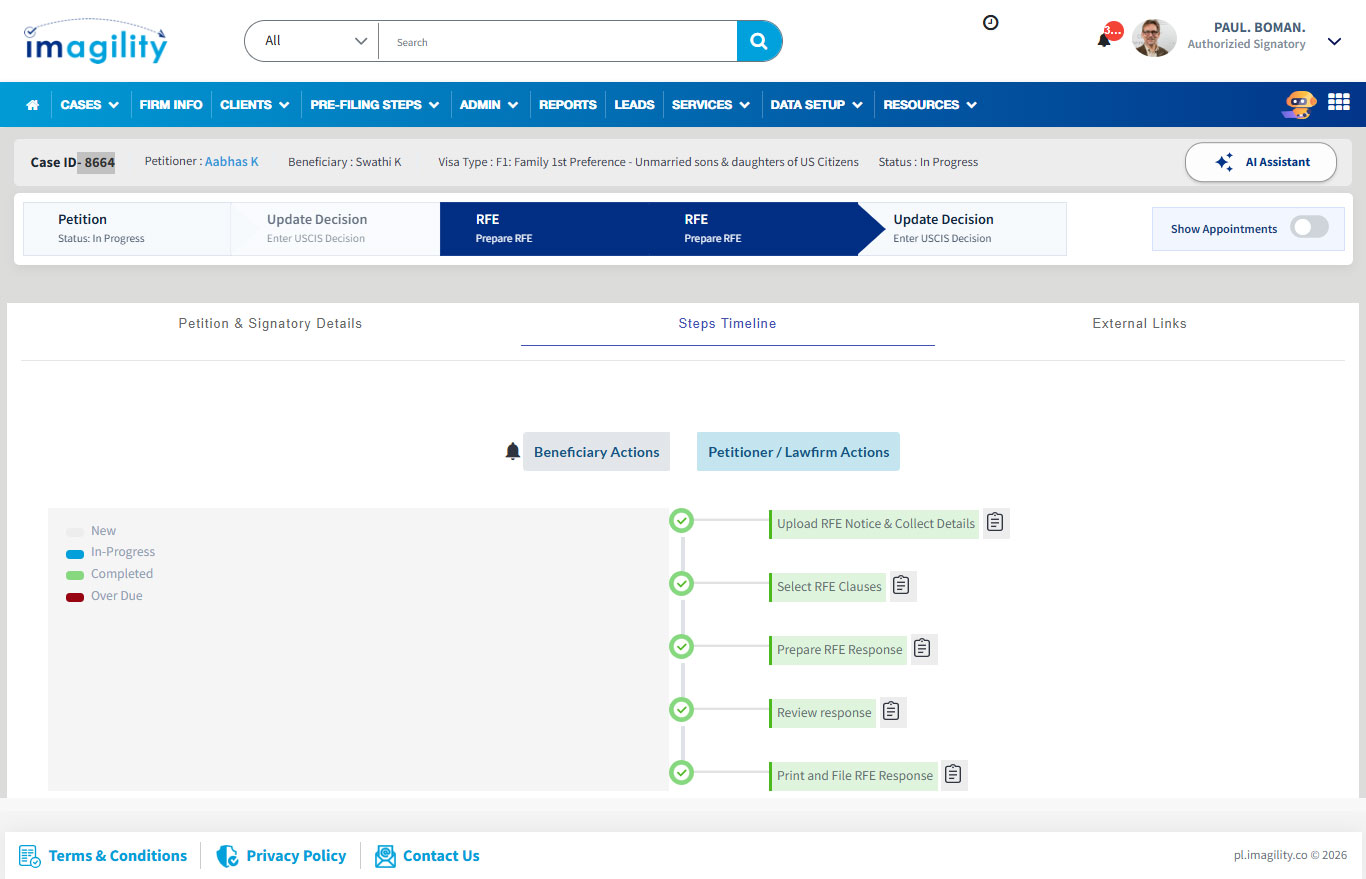
Modern immigration technology platforms significantly reduce RFE risk by strengthening petition quality before filing and improving response accuracy after an RFE is issued. AI-driven tools enhance it by identifying gaps, inconsistencies, and compliance risks early in the process.
AI-supported immigration platforms like Imagility help attorneys prepare stronger, more complete RFE responses by:
- Flagging missing or weak evidence
AI systems automatically compare petition requirements with uploaded documents and highlight gaps. For example, if an H-1B specialty occupation case lacks detailed job duty evidence or an evaluation for a foreign degree, the system alerts the legal team before submission or during RFE response preparation.
- Detecting inconsistencies across forms
Immigration petitions often contain repeated data across multiple forms, support letters, and prior filings. AI review tools scan for mismatches in job titles, employment dates, salary figures, work locations, or employer details, common triggers for RFEs, allowing attorneys to correct them proactively.
- Validating timelines and status history
Maintaining lawful status is a frequent RFE issue. AI tools map immigration timelines across I-94 records, prior approvals, employment history, and filing dates to identify status gaps, unauthorized employment periods, or expiration conflicts that require explanation.
- Highlighting eligibility gaps early
Advanced immigration platforms like Imagility link evidence to regulatory requirements (e.g., specialty occupation criteria, ability-to-pay standards, extraordinary ability criteria). This helps attorneys confirm that each eligibility element is supported and clearly documented in the RFE response.
- Structuring RFE response letters automatically
AI-assisted drafting tools can organize responses section-by-section following USCIS request order, ensuring no question is missed. Attorneys can then refine language and legal arguments rather than drafting from scratch.
Studies show that automation combined with attorney review can reduce filing errors by up to 30%.
Final Thoughts
For U.S. immigration attorneys, a structured RFE response process reduces risk, saves time, and improves approval outcomes. When supported by thorough review and technology-assisted checks, RFE responses become more predictable and manageable. Strong RFE responses protect clients, preserve case timelines, and strengthen long-term trust.