
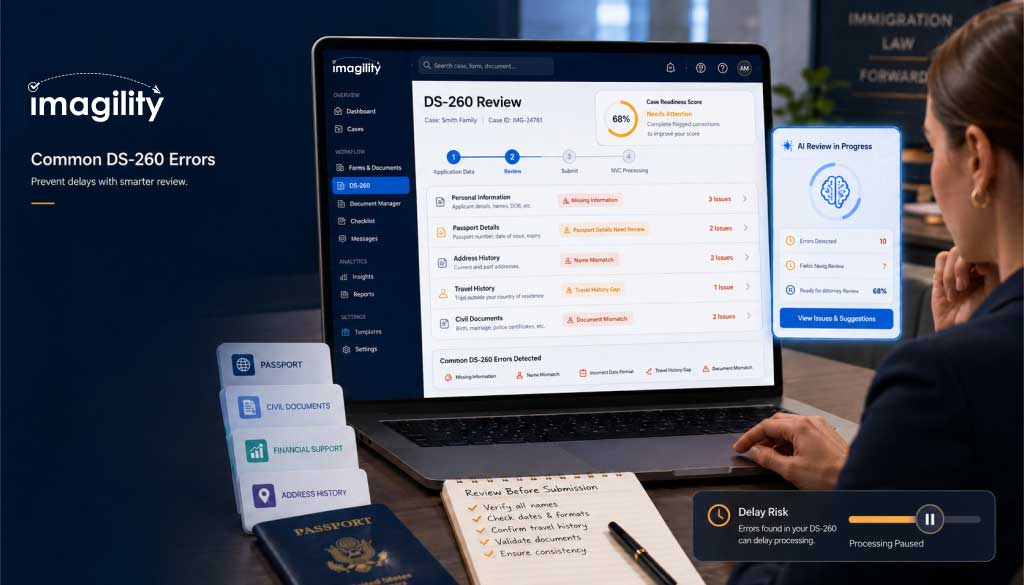
Even small mistakes on Form DS-260 can create significant immigrant visa delays. Incorrect travel history, inconsistent employment information, missing addresses, or document mismatches may trigger administrative processing, additional document requests, interview delays, or prolonged case review.
For immigration attorneys and applicants alike, DS-260 accuracy plays a major role in reducing immigration case backlog risks and avoiding unnecessary processing delays.
As immigrant visa scrutiny continues to increase, law firms are focusing more heavily on operational efficiency, document workflows, and immigration workflow automation to reduce filing inconsistencies and improve attorney productivity.
This guide explains the most common DS-260 mistakes that delay immigrant visa processing and how immigration case management software helps legal teams improve accuracy and reduce workflow bottlenecks.
What Is Form DS-260?
Form DS-260, Immigrant Visa Electronic Application, is the online immigrant visa application submitted through the U.S. Department of State’s Consular Electronic Application Center (CEAC).
The DS-260 collects detailed information about the applicant, including
- personal history
- travel history
- employment history
- education
- family relationships
- prior immigration records
- security and background information
Consular officers use this information to determine immigrant visa eligibility and verify consistency across immigration records.
Because the DS-260 becomes part of the permanent immigration record, even minor inconsistencies may create delays or additional scrutiny.
Why DS-260 Accuracy Matters
A DS-260 is not simply a data entry form. Information entered into the application is reviewed against
- passport records
- prior visa applications
- USCIS petitions
- SEVIS history
- employment documentation
- travel records
- government databases
Inconsistencies may result in
- administrative processing
- interview delays
- requests for additional evidence
- document resubmission requests
- visa refusal under INA 221(g)
- extended immigrant visa processing timelines
For law firms managing high volumes of immigrant visa filings, even small filing errors can contribute to immigration case backlog issues and operational inefficiencies.
Common DS-260 Errors That Delay Immigrant Visa Processing
1. Inconsistent Employment History
One of the most common DS-260 mistakes involves employment history inconsistencies.
Applicants sometimes
- omit prior employers
- enter incorrect employment dates
- use inconsistent job titles
- provide information that conflicts with prior USCIS filings
Consular officers frequently compare DS-260 information against previously filed petitions such as
- I-130
- I-140
- H-1B petitions
- DS-160 filings
Even small discrepancies may trigger additional review.
Immigration attorneys often use immigration case tracking software and document workflow systems to maintain consistency across filings and reduce manual review errors.
2. Incorrect Address History
Missing or incomplete address history is another major source of delays.
Applicants frequently
- forget prior addresses
- enter overlapping dates
- provide incomplete international addresses
- omit temporary residences
Address inconsistencies may trigger additional background verification checks or delays during consular review.
Strong immigration task management processes help legal teams verify historical information before submission.
3. Passport and Identity Information Errors
Simple typographical mistakes can create significant delays.
Common issues include
- incorrect passport numbers
- name spelling mismatches
- incorrect passport expiration dates
- inconsistent birth information
- formatting errors
These errors may prevent records from matching government databases correctly.
Immigration workflow automation tools help reduce repetitive manual entry errors that commonly occur during high-volume case preparation.
4. Missing Travel History Information
Applicants sometimes fail to disclose
- prior U.S. visits
- visa refusals
- overstays
- prior immigration filings
- international travel history
Consular officers routinely cross-reference prior immigration records.
Incomplete travel disclosures may trigger administrative processing or requests for clarification.
5. Uploading Incorrect Civil Documents
Document workflow problems often create avoidable delays.
Common document issues include
- blurry scans
- untranslated documents
- expired civil documents
- incorrect file uploads
- missing supporting evidence
Efficient document workflows and immigration workflow automation systems help firms organize civil documents more accurately while reducing workflow bottlenecks.
How DS-260 Errors Contribute to Immigration Case Backlogs
Immigration delays rarely result from a single issue.
In many cases, repetitive filing inconsistencies, manual review processes, and incomplete documentation create compounding workflow problems that reduce attorney productivity and increase immigration case backlog risks.
For law firms handling large immigrant visa caseloads, inefficient workflows often lead to
- missed follow-ups
- document tracking issues
- deadline management problems
- delayed client communication
- increased administrative workload
- slower petition preparation
This is why many firms now prioritize legal workflow automation and law firm workflow management systems to improve operational efficiency.
How Immigration Workflow Automation Helps Reduce Processing Delays
Modern immigration case management software helps firms streamline immigrant visa preparation through
- automated document workflows
- centralized case tracking
- immigration task management
- deadline management tools
- filing consistency checks
- automated reminders
- petition tracking dashboards
These systems help firms
- reduce case processing delays
- reduce immigration case backlog
- improve immigration attorney productivity
- identify workflow bottlenecks earlier
- improve document organization
- simplify client communication
Many firms now rely on immigration case tracking software to manage growing caseloads more efficiently while maintaining filing accuracy.
Internal Process Improvements Attorneys Use
Experienced immigration attorneys often implement internal review procedures such as
- multi-stage DS-260 review checklists
- standardized document workflows
- automated deadline tracking
- consistency verification reviews
- centralized client communication systems
These operational improvements help firms reduce immigration case backlog risks while improving client experience and processing efficiency.
How Imagility Helps Immigration Law Firms Improve Workflow Efficiency
Managing immigrant visa filings manually can increase administrative workload, delay document reviews, and reduce attorney productivity.
Imagility helps immigration law firms improve operational efficiency through
- immigration workflow automation
- centralized document workflows
- immigration task management
- deadline management tools
- immigration case tracking software
- automated filing reviews
- workflow visibility dashboards
These tools help legal teams reduce case processing delays, improve filing consistency, and streamline immigration case management across high-volume caseloads.
You can also explore
- SOC Code Risk Calculator
- Immigration Workflow Automation Solutions
- Immigration Case Management Software Features
- H-1B Petition Review Tools
Final Thoughts
DS-260 errors can create serious immigrant visa delays, especially when inconsistencies affect employment history, travel records, civil documentation, or identity information.
As immigrant visa processing becomes increasingly complex, immigration law firms are focusing more heavily on legal workflow automation, operational efficiency, and immigration case management software to reduce workflow bottlenecks and improve filing accuracy.
Strong document workflows, proactive case tracking, and automated review systems help attorneys reduce immigration case backlog risks while improving client service and overall productivity.
Careful DS-260 preparation today can prevent months of avoidable delays later.