

What is AI-Powered Petition Analysis? How Imagility Uses AI to Analyze Immigration Petitions
Preparing an immigration petition is a detailed and high-stakes process. Each filing includes multiple forms, supporting documents, letters, and timelines that must align perfectly. Even small mistakes such as a missing document, a mismatched date, or an unclear explanation can result in a Request for Evidence (RFE), long delays, or even a denial.
Traditionally, attorneys and legal teams relied on manual reviews to catch these issues. While thorough, manual review is time-consuming and still prone to human error, especially when handling high case volumes. This is where AI-powered petition analysis is changing the way immigration petitions are prepared and reviewed.
This e-guide explains what AI-powered petition analysis is, how it works, and how Imagility uses AI to help attorneys and petitioners submit stronger, more complete immigration petitions.

What Is AI-Powered Petition Analysis?
AI-powered petition analysis is an automated review system that examines all parts of an immigration petition before it is filed. This includes USCIS forms, employer letters, beneficiary documents, and supporting evidence.
The goal is to simply identify gaps, errors, and risks early, so they can be fixed before submission.
Instead of replacing attorneys, AI acts as a second set of eyes. It scans petitions quickly and consistently, flagging issues that might otherwise be overlooked during manual review. This helps reduce RFEs, avoid unnecessary delays, and improve overall filing quality.
Why Petition Analysis Matters More Than Ever
According to USCIS data and industry studies, a large percentage of RFEs are issued not because applicants are clearly ineligible, but because:
- Required evidence was missing
- Information was inconsistent across documents
- Explanations were unclear or incomplete
Legal operations research also shows that attorneys can spend up to 40 percent of their time on repetitive review tasks such as checking forms, comparing documents, and verifying details. AI-powered analysis helps reduce this burden by handling the first round of checks automatically.
Key Capabilities of AI-Powered Petition Analysis
AI-Based Consistency Checks
One of the most common reasons for RFEs is inconsistent information. AI-powered petition analysis cross-verifies data across all forms and documents, including:
- Names
- Job titles
- Employment dates
- Employer details
For example, if a job title listed on Form I-129 does not exactly match the title used in the support letter, the system flags the mismatch for review.

Completeness
Verification
AI checks whether all required sections of a petition are fully completed. This includes:
- Mandatory form fields
- Required supporting documents
- Necessary exhibits based on petition type
If any section is incomplete or incorrectly filled, the system alerts the user before filing.
Error Detection
AI is especially effective at catching small but critical errors, such as:
- Missing signatures
- Incorrect or invalid date formats
- Mismatched data across documents
These issues may seem minor, but they can delay processing or lead to rejection if not corrected.

Qualification and Eligibility Gap Identification
AI-powered petition analysis helps identify whether the beneficiary appears to meet the basic qualification and eligibility requirements for the petition type.
This includes reviewing:
- Education and degree details
- Work experience
- Immigration status information
If the system detects gaps such as missing education documents or unclear experience details, it flags them early, giving attorneys time to strengthen the case.
Regulatory Compliance Checks
Immigration regulations change frequently, and keeping up with every requirement can be challenging. AI helps by checking for common compliance issues, such as:
- Invalid or expired passport dates
- Missing itineraries for multi-site work
- Missing fee calculation details or proof of payment
By identifying these issues early, firms can reduce avoidable delays and compliance risks.
Logical Inconsistency Detection
Logical inconsistencies are contradictions or implausible claims that can raise red flags during adjudication. AI analyzes the petition package for issues such as:
- Gender or marital status inconsistencies
- Conflicting petitioner details
- Mismatched place of birth or citizenship information
These issues can undermine the credibility of a petition and lead to RFEs or Notices of Intent to Deny (NOIDs).
Document Matching and Validation
AI verifies that narrative letters are properly supported by documents. It checks whether:
- Required documents are present
- Documents are valid and unexpired
- File formats meet submission standards
If a critical document is missing or improperly formatted, the system flags it for correction.

Petition Health Scoring System
Imagility assigns a Petition Health Score to visually represent how ready a petition is for filing. This score helps attorneys and petitioners:
- Quickly understand overall petition quality
- Focus on high-risk areas first
- Track improvements after making corrections
The scoring system makes review more efficient and more transparent.
Manual Review vs. AI-Powered Petition Analysis
The Manual Process
Manual review of every form and document
High risk of missed
inconsistencies
Multiple rounds of re-checking
Greater chances of receiving RFEs
Imagility’s Petition Analysis
Instant visibility into gaps and risks
Automated detection of issues humans may overlook
Reduction in review cycles by 50 to 70 percent
Stronger initial filings that help minimize RFEs
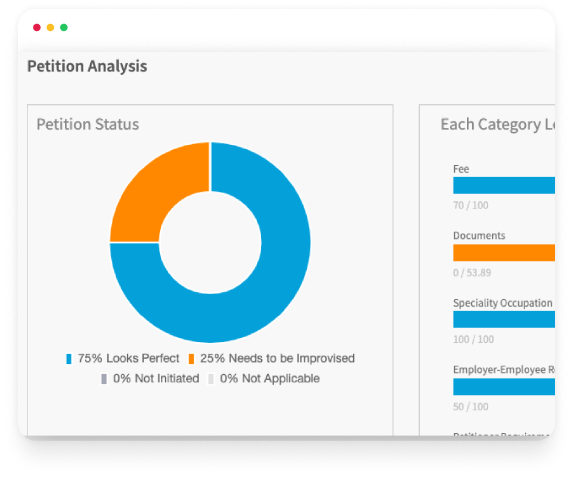
Petition Analysis Categories in Imagility
Imagility’s petition analysis for H-1B visa petitions follows a structured, step-by-step approach across multiple categories. Each category focuses on a specific part of the petition to help identify gaps, inconsistencies, or risks early in the process before filing.
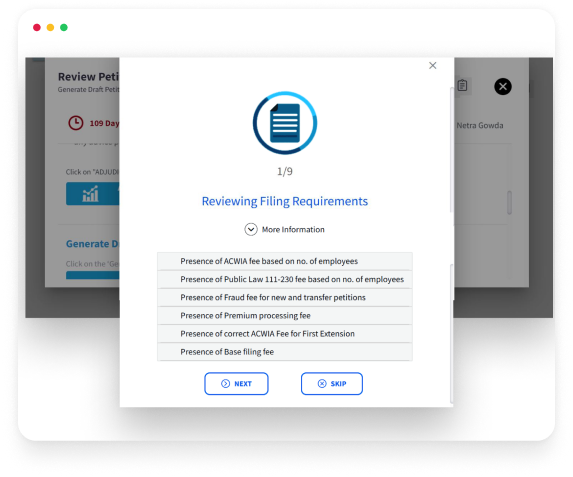
Reviewing Filing Requirements
Imagility first reviews whether the basic filing requirements are correctly addressed. The system checks whether the appropriate USCIS fees are applied based on factors such as:
- The type of petition being filed
- The size of the company
- The total number of employees
This helps reduce the risk of rejections caused by incorrect fee calculations or missing payment details.
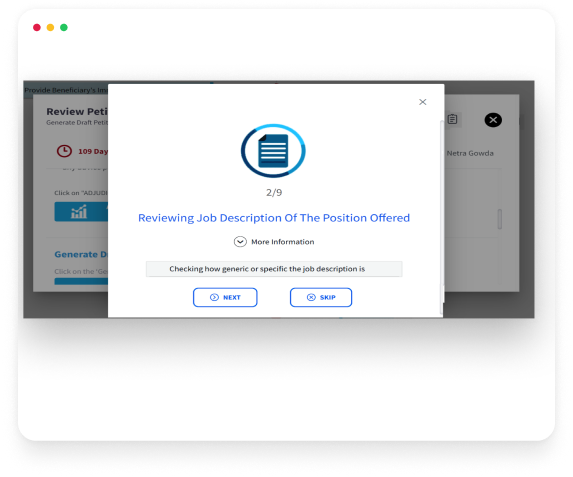
Analyzing the Job Description
In this step, AI reviews the job description provided in the petition. It assesses whether the role appears to align with the requirements of a specialty occupation based on the information entered. The system looks for clarity, role consistency, and alignment between job duties and position expectations.
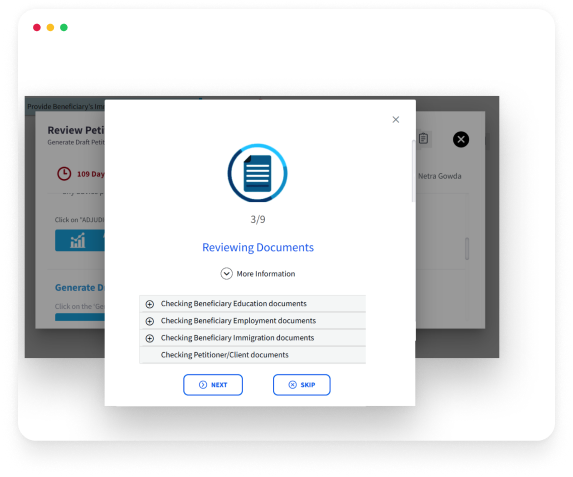
Identifying Missing Documents
Imagility checks whether all required supporting documents appear to be included. This includes documents related to:
- Beneficiary education
- Work experience
- Immigration history
If any expected document is missing or incomplete, the system highlights it early so it can be addressed before submission.
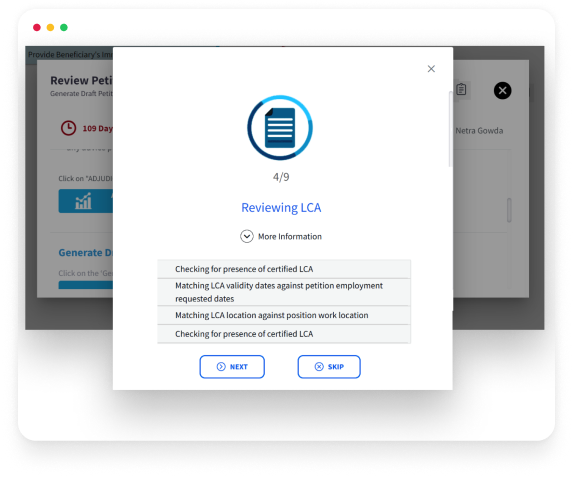
Checking LCA Accuracy
Imagility checks whether all required supporting documents appear to be included. This includes documents related to:
- Whether the LCA applies to the specific petition position
- Whether the LCA validity dates match the employment dates
- Whether the listed work locations align with the petition details
These checks help reduce risks related to mismatched dates or locations.
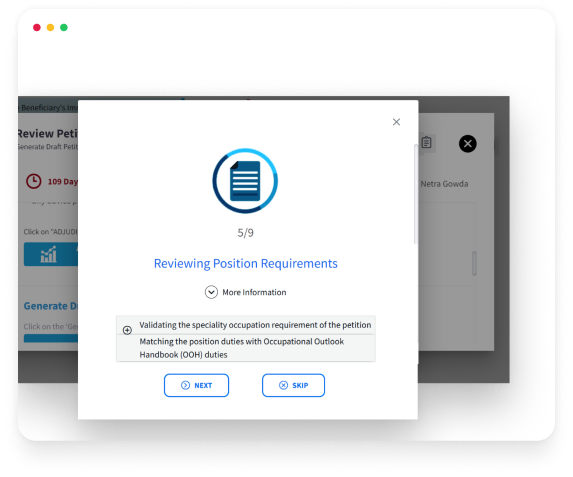
Reviewing Position Requirements
Imagility evaluates the stated position requirements to see if they appear consistent with the claimed role. This step focuses on whether the requirements make sense for the position and are presented clearly within the petition.
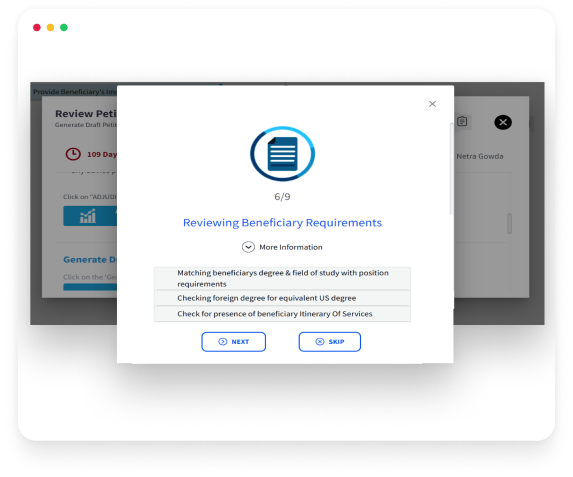
Reviewing Beneficiary Qualifications
In this category, AI compares the beneficiary’s background against the position requirements. It reviews details such as:
- Degree level
- Field of study
- Prior work experience
The goal is to identify any gaps or areas that may need stronger explanation or documentation.
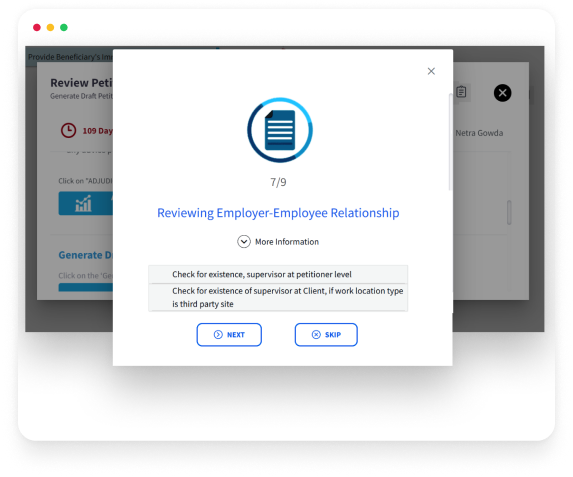
Checking Employer–Employee Relationship
Imagility checks for the presence of documents that demonstrate a valid employer–employee relationship. This includes evidence showing that the beneficiary has a legitimate offer of employment from the petitioner.
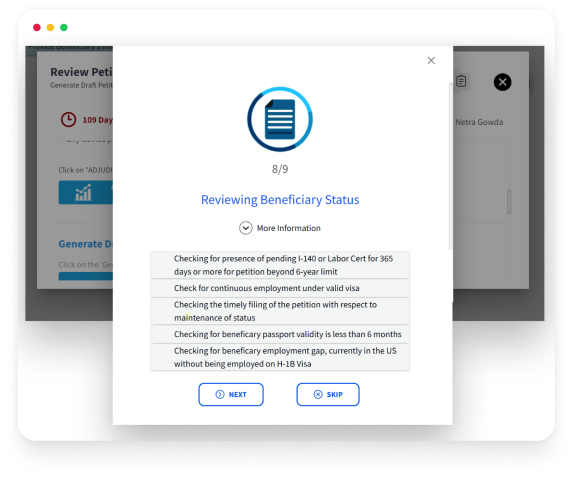
Checking Beneficiary Status Eligibility
The system reviews whether the beneficiary appears to be maintaining valid immigration status at the time of filing. It also checks for job continuity where applicable, helping identify potential status-related risks early.
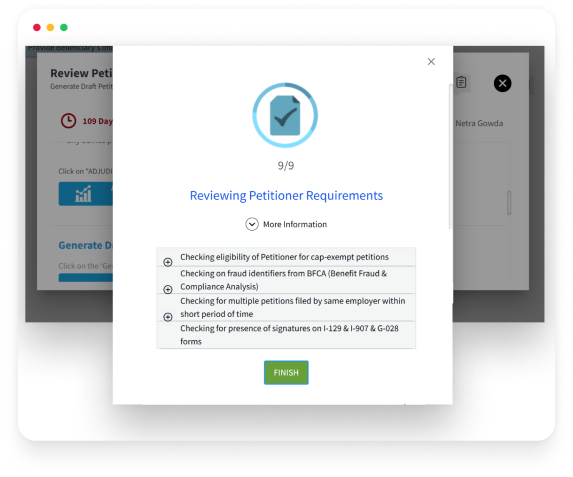
Reviewing Petitioner Requirements
Imagility validates petitioner details using available reference data. This includes reviewing:
- Company information
- Employee strength
- Revenue indicators
These checks help flag potential risk indicators that may require closer review.
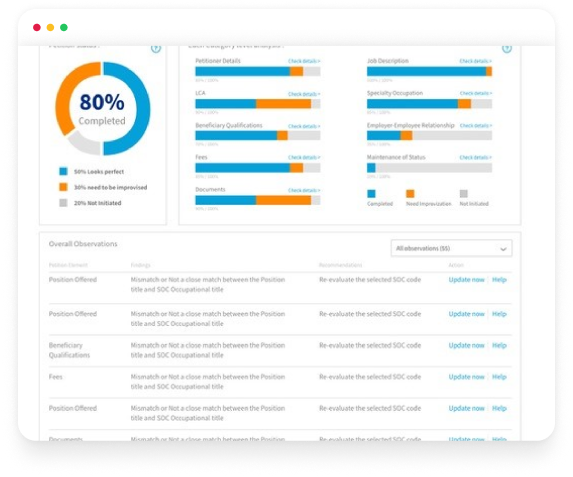
View Report and Repeat
At the end of the analysis, users receive a clear, visual report that summarizes:
- Findings from the analysis
- Areas that need attention
- Recommendations for improvement
Attorneys and petitioners can update the petition and rerun the analysis as many times as needed. This repeatable process helps strengthen the petition and improve overall filing readiness before submission.
Final Thoughts
By automatically checking consistency, completeness, eligibility indicators, and compliance risks, AI helps immigration attorneys and petitioners submit stronger, more accurate petitions. With tools like Imagility’s Petition Analysis, firms can reduce errors, minimize RFEs, and improve client confidence while saving valuable time.